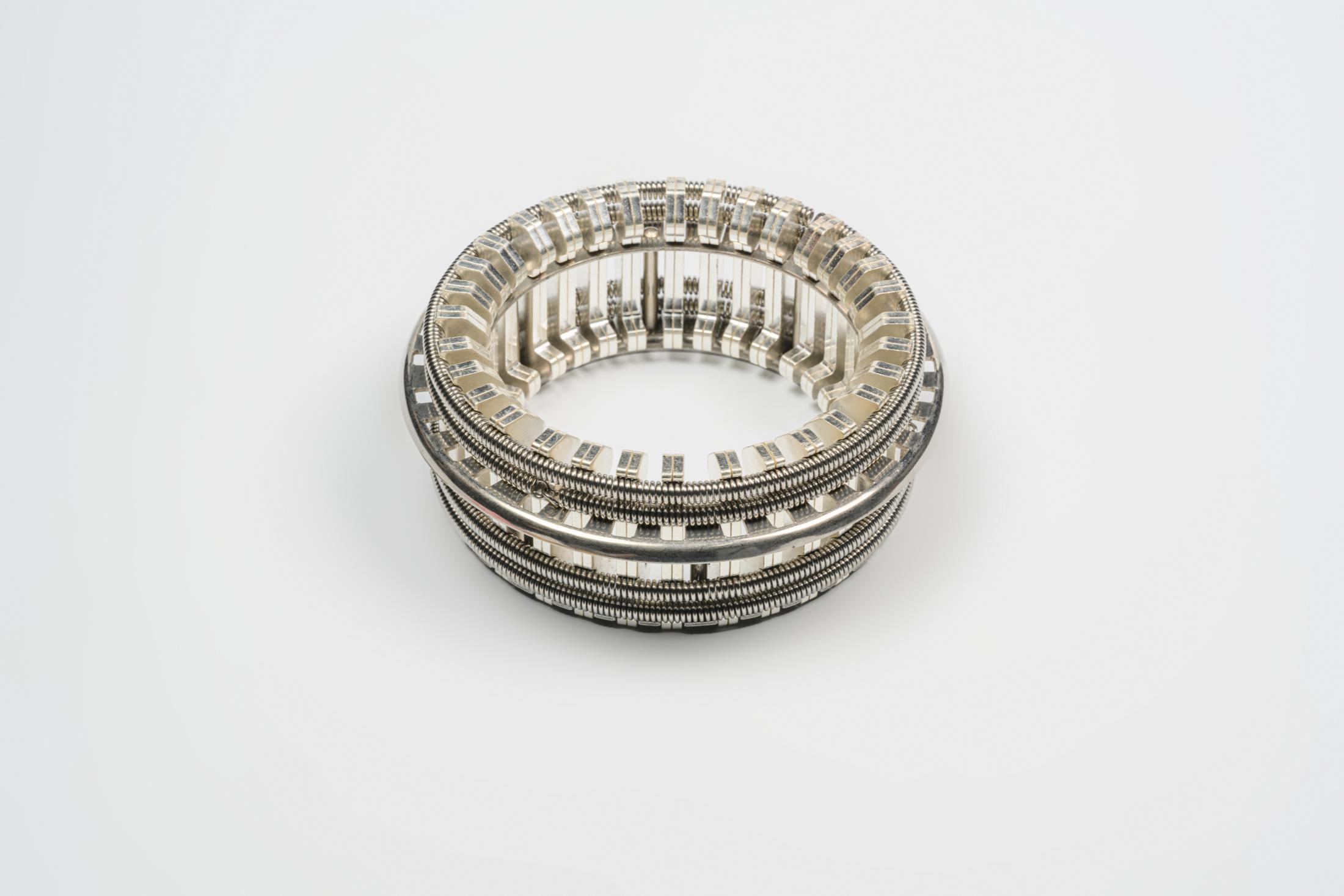
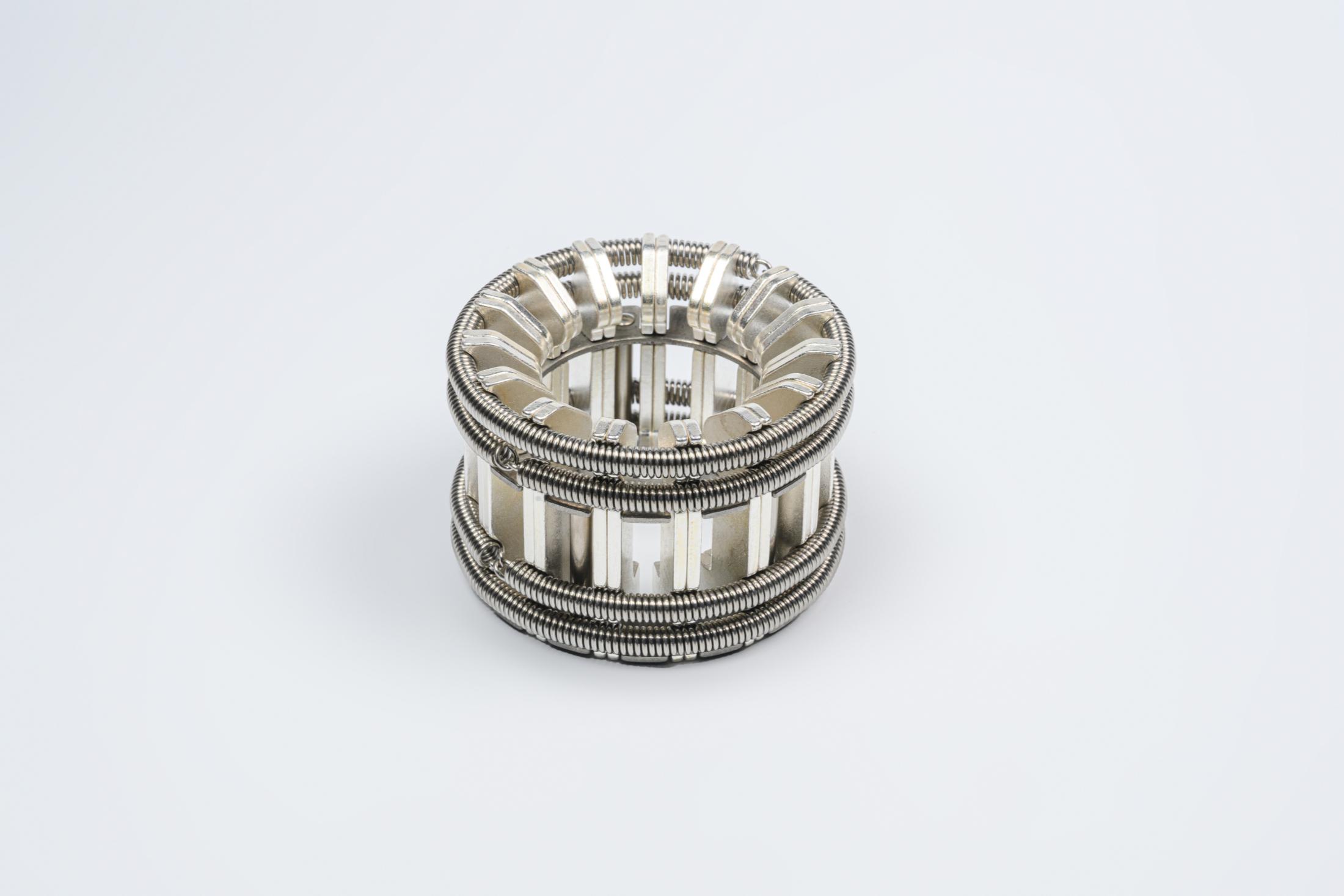
630A Tulip Contact (Standard Series)
The 630A Standard Series tulip contact is the cost-optimized variant of our 630A line, designed for high-volume MV switchgear builds where price per piece m...
Tulip contacts are the multi-finger spring-loaded plug-in contacts used in withdrawable circuit breakers, vacuum interrupters, switching mechanisms, and any application that needs a low-resistance, repeatable plug-and-unplug connection at MV current levels. The name comes from the shape : fingers arranged radially around a central axis, opening like petals when the mating contact slides in. We supply tulip contacts at 630A, 1250A, and higher current ratings, in standard and custom designs. Most of our tulip work is for VCB withdrawable assemblies and busbar plug-in connections; some volume goes into surge arrester components and other specialized MV equipment.
The 630A Standard Series tulip contact is the cost-optimized variant of our 630A line, designed for high-volume MV switchgear builds where price per piece m...
The CuW tulip contact is a plug-in tulip assembly with CuW-tipped fingers for applications where the contact sees arc exposure during insertion or break, no...
The surge arrester contact assembly is a complete sub-assembly including the disconnector tulip contact, spring mechanism, housing, and supporting components...
The surge arrester tulip contact is a plug-in contact component used in MV surge arrester assemblies, typically at the disconnector interface where the arre...
The 1250A tulip contact is one of the most common ratings in MV switchgear. It covers feeder breakers, transformer-tap VCBs, and bus-tie applications in dis...
The 630A tulip contact is the workhorse of distribution-class MV switchgear.
The multi-finger plug-in contact goes by several names depending on whose drawing you are reading. Tulip contact, tulip cluster contact, cluster contact, tulip type contact: all describe fingers arranged radially around a bore, sprung against the mating pin or bar when it slides in. European drawings tend to say tulip; North American ones often say cluster. Nothing about the part changes.
What does change between designs is the spring arrangement, and that is where interchangeability breaks. A garter-spring tulip and a leaf-sprung tulip of the same nominal rating are not swappable, because the contact force curve over insertion depth is different.
| Product | Rating | Notes |
|---|---|---|
| Tulip Contact 630A | 630 A | The workhorse of distribution-class MV switchgear |
| 630A Standard Series | 630 A | Cost-optimised variant for high-volume builds |
| Tulip Contact 1250A | 1250 A | Feeder breakers, transformer-tap VCBs, bus-tie |
| CuW Tulip Contact | Per drawing | CuW-tipped fingers where insertion or breaking sees an arc |
| Surge Arrester Tulip Contact | Per drawing | Disconnector interface in MV surge arrester assemblies |
| Surge Arrester Contact Assembly | Per drawing | Complete sub-assembly: contact, spring, housing |
The current rating guide explains why a 630 A tulip is not simply half a 1250 A one, and the selection guide covers finger count, plating, and spring choice.
Tulip contacts exist to be plugged and unplugged. If the joint is made once and bolted, a tulip adds cost, contact resistance, and a spring that relaxes over time for no benefit. If the joint carries continuous current but never separates under load, a fixed contact assembly is the cheaper and more reliable part. Tulip contact vs finger contact draws the line.
The current rating, the mating pin or bar diameter, the insertion depth, and the plating. If it is a replacement, a drawing or a sample beats the rating on the old order — ratings are shared across designs that are not interchangeable.
Standard finish is silver plating on the contact surface. Plating thickness is specified on the drawing; tell us the switching cycle count if the drawing is silent, because that is what sets it.
Usually. Send the sample and say which dimensions are functional. Measure the mating pin as well — a worn tulip has spread, and copying it reproduces the fault.