Product Details
CuW Guide Pin for Vacuum Interrupters
In vacuum interrupter assemblies, guide pins control the moving contact's travel path and prevent rotation during opening and closing.
Technical Description
CuW Guide Pin for Vacuum Interrupters
In vacuum interrupter assemblies, guide pins control the moving contact's travel path and prevent rotation during opening and closing. Most guide pins are steel or hard aluminum, adequate when arc exposure is unlikely. CuW guide pins are specified when the pin sits close enough to the contact gap that arc exposure is possible; in that case the pin needs arc-erosion resistance.
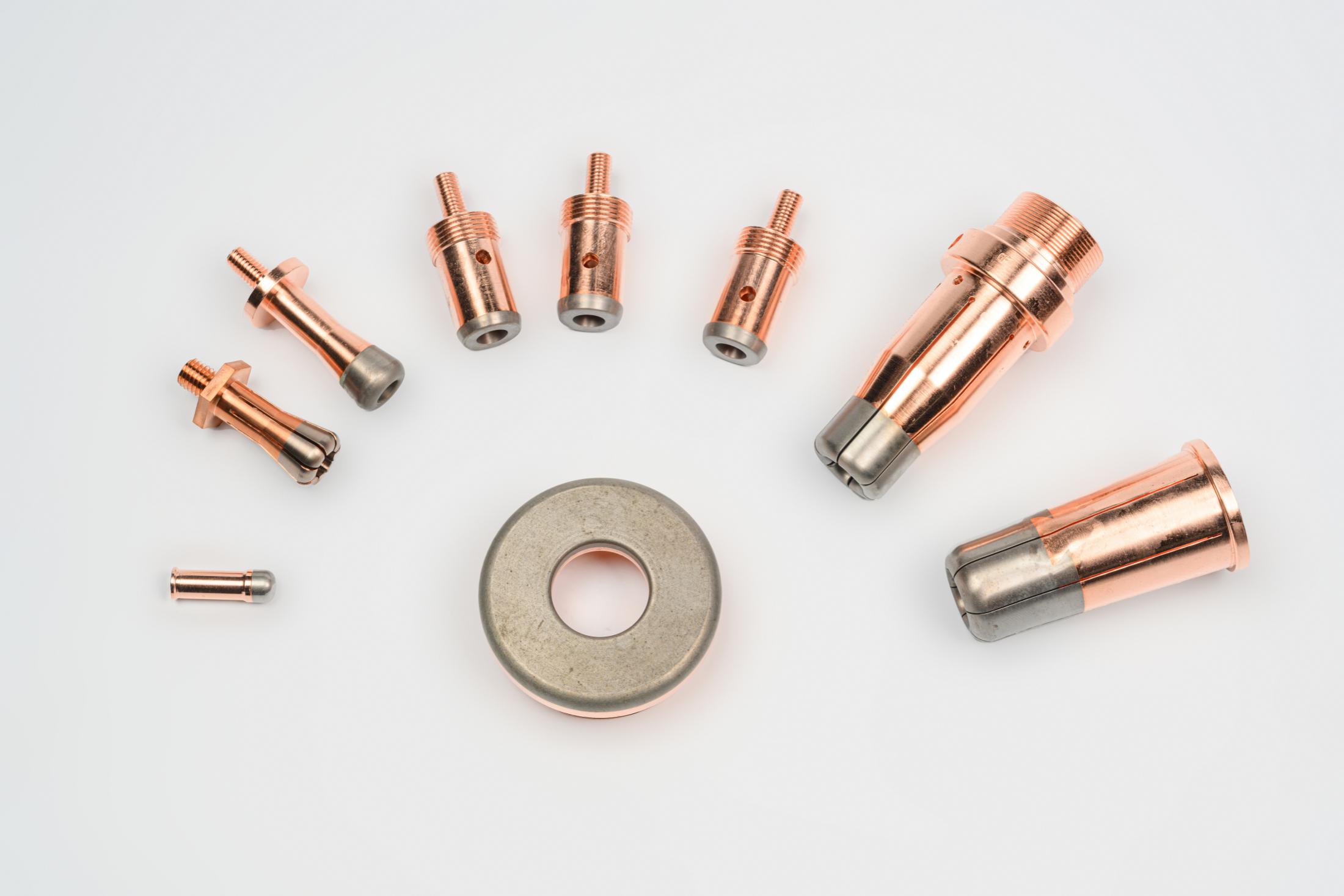
We supply CuW guide pins in CuW70 / 75 / 80, machined to drawing. The pin form is straightforward, typically a cylindrical body with optional flange, thread, or chamfer features for assembly.
Specifications
| Property | Value |
|---|---|
| Material Grade | CuW70 / CuW75 / CuW80 |
| Tungsten Content | 70, 75, or 80 wt% |
| Form | Cylindrical pin with optional features (per drawing) |
| Diameter Range | Per drawing |
| Length Range | Per drawing |
| Tolerance | Per drawing |
| Surface Treatment | As machined |
| Features | Flanges, threads, chamfers per drawing |
| Electrical Conductivity | 32–45% IACS depending on grade (per ASTM B702 typical) |
| Hardness (HB) | 175–240 depending on grade |
Exact certified properties for your lot are available with material documentation on request.
Applications
- Guide pins in vacuum interrupter assemblies where arc exposure is possible
- Alignment pins in MV switchgear contact mechanisms with arc-adjacent placement
- Replacement pins for VI refurbishment programs
- Custom CuW pins for specialized assembly geometries
Technical Notes
The choice to use CuW for a guide pin instead of steel or aluminum is application-specific. If the pin sits more than a few millimeters away from the arc gap inside the VI, a non-CuW material is usually fine; the pin doesn't see significant arc exposure. If the pin is close to the contact path or in line with the arc-quenching vapor flow, CuW makes sense.
For a typical VI design, the guide pin is dimensionally simple but tightly toleranced. It has to slide cleanly through bushings or guide bores under repeated operation. Surface finish and straightness are usually the critical specs, not material strength.
If you're evaluating CuW vs steel for a new VI design, send the assembly cross-section and we can comment on whether CuW is justified. Often it's not, and the cost savings of steel are real.
Sourcing & OEM
Custom CuW pins from drawing are routine. MOQ, lead time, and feature options vary by specification; contact us with your drawing for a project-specific quote.
Technical FAQ
Common questions about this product.
Do all vacuum interrupters need CuW guide pins?
No. Most use steel or hard aluminum pins. CuW pins are specified only when the pin sits close enough to the contact gap that arc exposure matters. For new designs, evaluate whether arc exposure is real before specifying CuW. It's often not necessary.
What grades are available?
CuW70, CuW75, and CuW80. CuW70 is typical for guide pins; higher tungsten content is rarely needed since the pin doesn't see direct arc duty.
Can pins be supplied with threaded ends?
Yes. Threading, chamfers, flanges, and other end features are routine per drawing.
What tolerance can you achieve on diameter and straightness?
General machining tolerance per drawing. Tight tolerances on straightness for long pins may require post-machining straightening; specify in your order.
What is the typical lead time?
Lead time varies by grade, dimensions, features, and order volume. Contact us with your spec for a project-specific timeline.
You May Also Like
Related Products
Similar components you may need.