Product Details
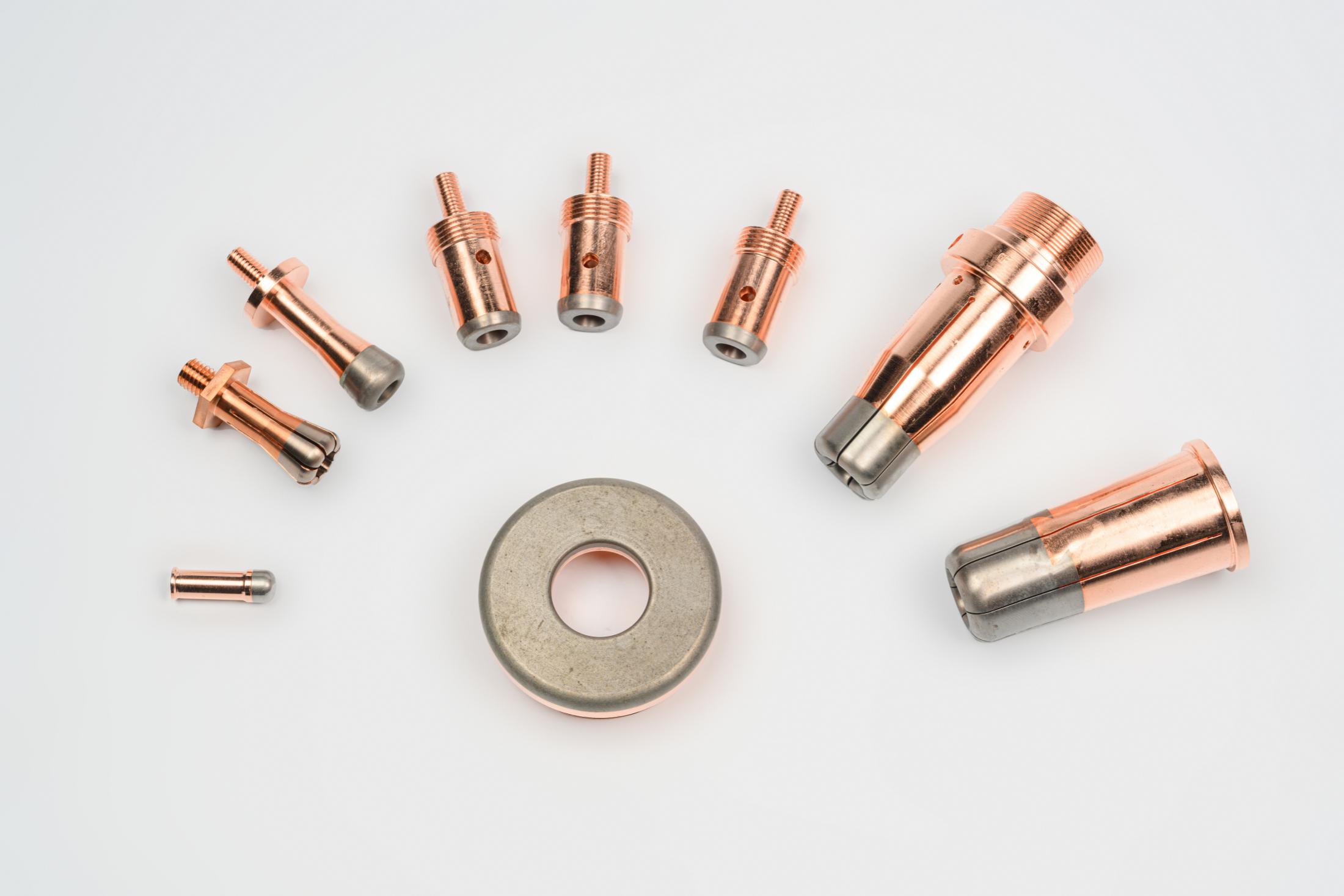
CuW Shielding Cap
Inside a vacuum interrupter, the shielding cap sits around the contact gap and absorbs the metal vapor that comes off the arc.
Technical Description
CuW Shielding Cap
Inside a vacuum interrupter, the shielding cap sits around the contact gap and absorbs the metal vapor that comes off the arc. Without it, that vapor would condense on the ceramic envelope and degrade insulation over time. The cap is one of two main vapor-handling components in a VI (the other being the main center shield); the cap protects the regions closest to the ceramic-to-metal seal.
CuW is used for the cap because it tolerates the recurring vapor flux without melting or distorting. We supply caps in CuW70 and CuW75 by default; CuW80 is available on request. Standard cap geometries are machined from drawing.
Specifications
| Property | Value |
|---|---|
| Material Grade | CuW70 / CuW75 (CuW80 on request) |
| Tungsten Content | 70 or 75 wt% |
| Form | Machined cap (cylindrical with flange / groove, to drawing) |
| Dimensions (OD × Height) | Per drawing |
| Wall Thickness | Per drawing |
| Tolerance | Per drawing |
| Electrical Conductivity | ≥42% IACS (CuW70) / ≥38% (CuW75) per GB/T 8320-2025 |
| Density | ≥13.80 g/cm³ (CuW70) / ≥14.50 (CuW75) per GB/T 8320-2025 |
| Hardness (HB) | ≥175 (CuW70) / ≥195 (CuW75) |
| Gas Content (vacuum switch grade) | O ≤0.008%, N ≤0.002% per GB/T 8320-2025 |
| Surface Treatment | As machined; bright finish on inner surface optional |
| VI Voltage Class | Common MV ratings: 12 / 24 / 40.5 kV |
| Ceramic Seal Interface | Flat flange or grooved, per drawing |
Exact certified properties for your lot are available with material documentation on request.
Applications
- Vapor shield component in 12 kV, 24 kV, and 40.5 kV vacuum interrupters
- Located adjacent to ceramic-to-metal seal in VI assembly
- Sealed-tube VI manufacturing for VCB OEMs and sub-suppliers
- Replacement caps for VI refurbishment programs
Technical Notes
Shielding caps work by giving evaporated metal a cooler surface to condense on before it reaches the ceramic envelope. The CuW alloy is chosen for its high melting point and dimensional stability under repeated thermal cycling. The cap heats and cools with each opening operation, and a material that warped or fatigued at those temperatures would compromise the seal.
Geometry matters more than for arc contacts. The cap fits inside the VI assembly with tight clearance to the ceramic envelope; deviation in OD or flange flatness can cause assembly issues at the braze seal. For sealed-tube VI manufacturing, we recommend supplying both the drawing and the mating ceramic part dimensions so we can confirm fit before machining.
Inner surface finish affects vapor condensation behavior. A bright machined finish gives more uniform condensation than an as-cast surface; we can polish to your spec if your VI design requires it.
Sourcing & OEM
Custom-machined to your drawing is the standard order pattern. Plating is uncommon on shielding caps (the inner surface needs to remain bare CuW), but available on the outer flange if required by your seal process. Lead time and MOQ vary by specification; contact us with your drawing for a project-specific quote.
Technical FAQ
Common questions about this product.
What is the difference between a shielding cap and a main center shield?
Both handle metal vapor inside the VI, but they sit in different locations. The main center shield surrounds the contact gap directly and absorbs the bulk of arc-generated vapor. The shielding cap sits closer to the ceramic-to-metal seal at one or both ends of the VI and prevents vapor from reaching the seal region. A typical VI has one center shield and one or two caps.
What grades of CuW do you use for shielding caps?
CuW70 and CuW75 are our defaults. CuW80 is available on request but is less common for caps. The higher tungsten content gives no operational benefit in the vapor-condensation role and costs more per part.
Can you machine caps to my drawing?
Yes. Most cap orders are custom geometries from drawing. Send the drawing along with the mating ceramic envelope dimensions if available; this lets us flag fit issues before machining.
What is the typical wall thickness for a shielding cap?
Wall thickness varies by VI voltage class and design; specific dimensions are confirmed per drawing. The drawing is the contract.
Are your shielding caps RoHS and REACH compliant?
Materials are sourced from suppliers providing RoHS and REACH declarations of conformity on request.
How do I request a sample?
Email sales@tungarc.com with the drawing or specification and intended VI program.
You May Also Like
Related Products
Similar components you may need.