Aluminum Bronze Rod
Aluminum bronze rod is the conductor material where mechanical strength and wear resistance matter alongside conductivity, typically in sliding-contact appl...
Conductive rods and conductors carry current through MV switchgear assemblies,from the cable termination through the breaker contacts to the outgoing bus. Material choice matters: pure copper has the highest conductivity but is mechanically softer; aluminum bronze is harder and more wear-resistant but loses some conductivity; CuW handles arc-exposed segments without melting. Most MV current paths use copper for the bulk of the run and bronze or CuW for the arc-exposed or sliding-contact segments. We supply conductive rod and conductor elements in copper (C10100 / C11000 OFC and ETP grades), aluminum bronze (C95400), and as machined components combining multiple materials. For CuW rod, see the Copper Tungsten Series.
Aluminum bronze rod is the conductor material where mechanical strength and wear resistance matter alongside conductivity, typically in sliding-contact appl...
Pure copper rod is the workhorse conductor in MV switchgear current paths, main bus, breaker conductor, terminal extensions, and the dozens of short copper...
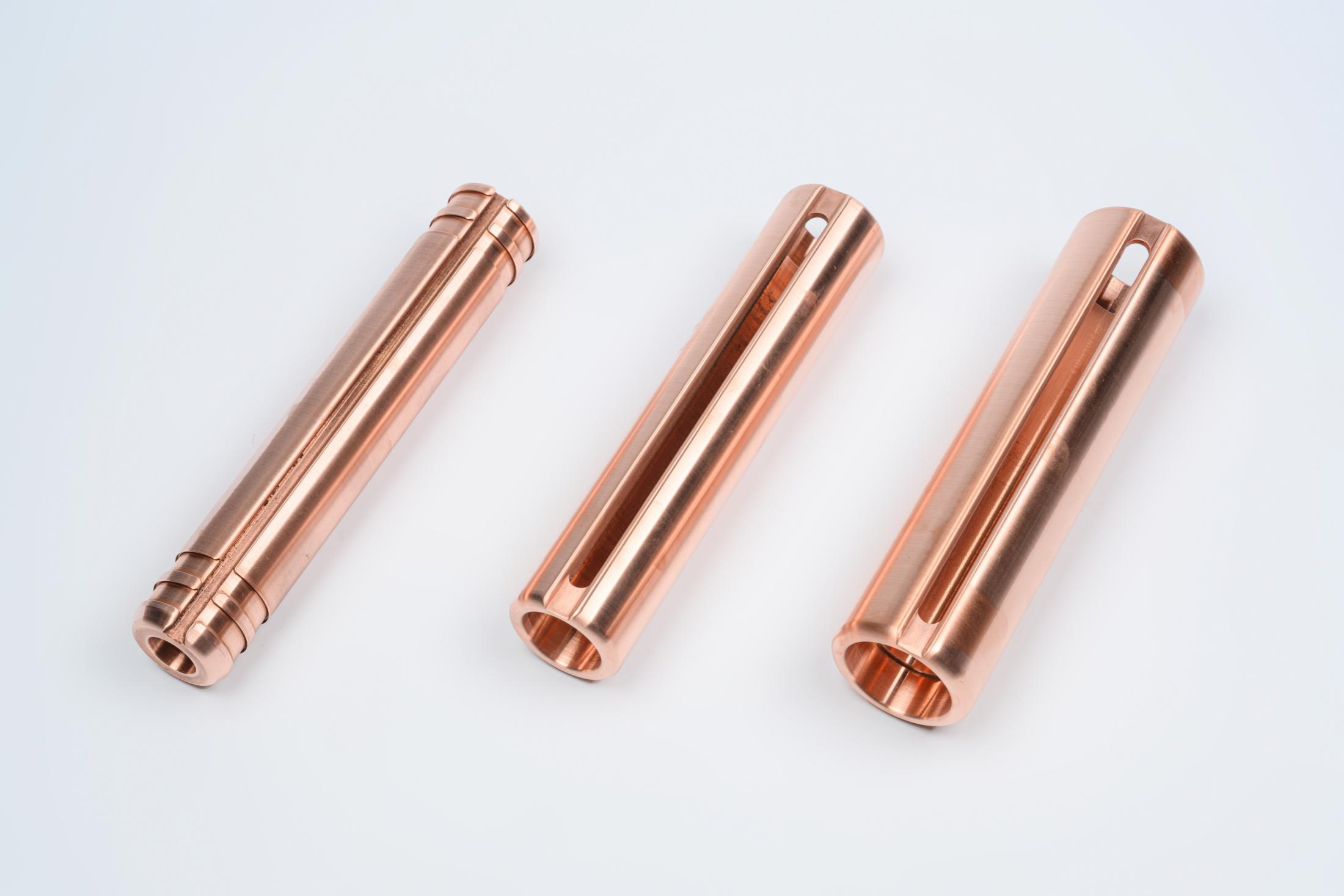
Machined copper conductor elements are the near-final-shape current-path segments in MV switchgear and VCB assemblies, not rod stock, but parts machined to...
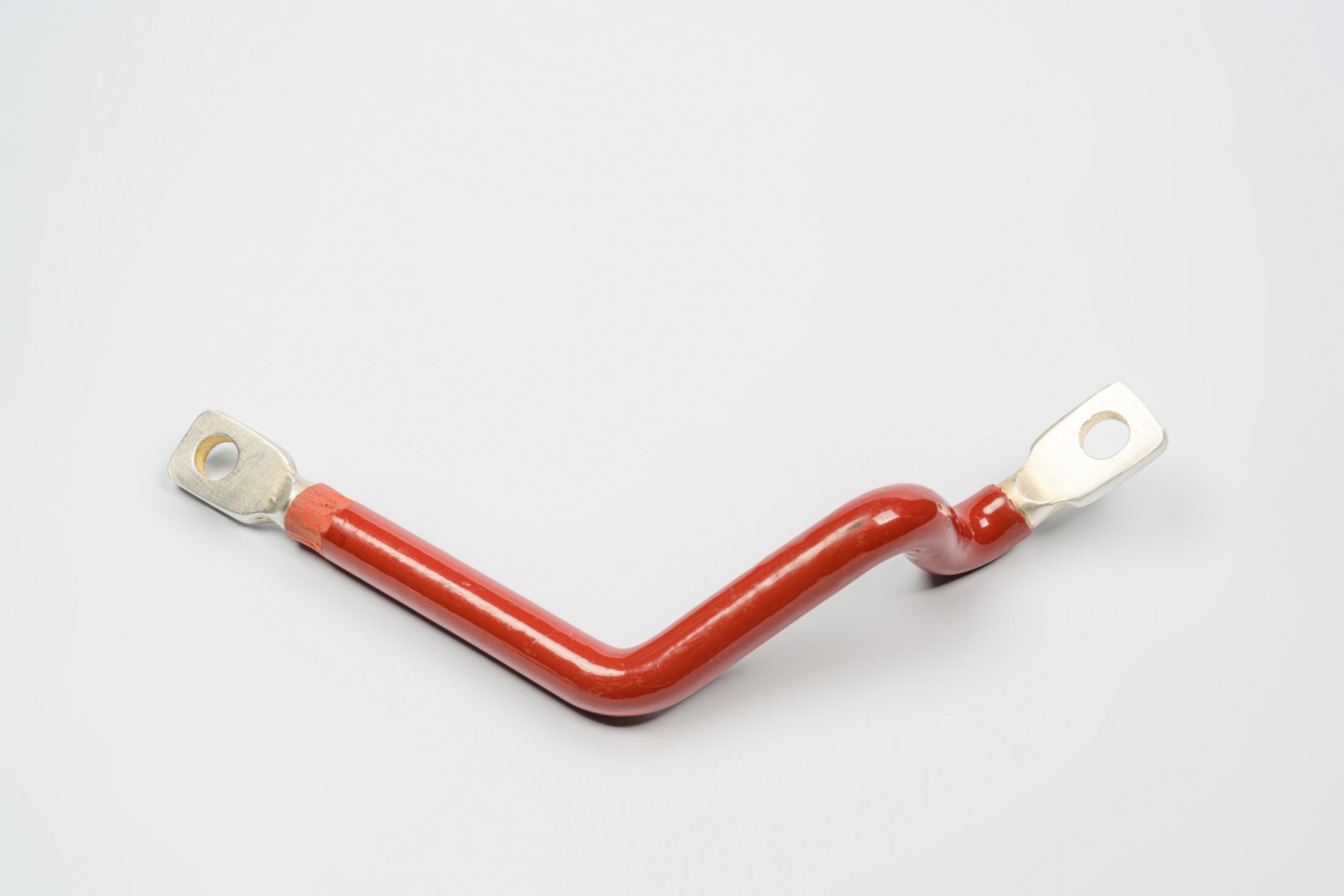
The moving contact conductor is the rod connecting an MV breaker's operating mechanism to the moving contact face. It carries the breaker's continuous curre...
Copper rod is sold under a handful of designations that buyers meet as acronyms on a datasheet. They describe how the copper was made and how much oxygen is left in it, and that decides whether the rod can be brazed, welded, or run in a hydrogen atmosphere.
| Grade | What it is | Notes |
|---|---|---|
| C11000 ETP | Electrolytic tough pitch copper | The default conductor grade. Usually supplied as CCR — continuous cast rod. Residual oxygen makes it prone to hydrogen embrittlement, so avoid it for parts brazed in a reducing atmosphere |
| C10100 OFC / OFE | Oxygen-free copper | Specified where brazing atmosphere, welding, or vacuum service rules out ETP |
| C95400 | Aluminum bronze | Harder and wear-resistant, at a conductivity penalty. Sliding-contact segments |
| CuW | Copper tungsten | Arc-exposed segments only — see the CuW series |
Most MV current paths mix them: copper for the bulk of the run, bronze or CuW for the sliding or arc-exposed segments. The conductor material selection guide works through where each transition belongs.
Two different orders come through this page and it is worth being explicit which one you need.
Rod stock — copper conductive rod and aluminum bronze rod, bought by length and machined by you.
Machined conductors — near-final-shape current-path parts, not stock. Copper conductor elements are the machined segments in MV switchgear and VCB assemblies, and the moving contact conductor is the rod linking a breaker's operating mechanism to the moving contact face.
The machining side is CNC turning and milling from bar, to drawing, with cross holes, threads, flats, and brazed transitions where the drawing calls for them. Copper turns badly at the wrong feeds and speeds — it smears rather than cutting — so surface finish on a copper conductor is worth calling out explicitly rather than leaving to a general tolerance note.
ETP unless something downstream rules it out. The two usual reasons to move to C10100 are brazing in a hydrogen or cracked-ammonia atmosphere, and any vacuum service. Both cases are decided by your process, not by the conductor's electrical duty.
Silver and tin plating to drawing. State the thickness and the surfaces to be masked — masking is usually where a plated conductor drawing is under-specified.
Grade, diameter or section, length, and quantity for rod stock. For machined conductors, a drawing plus the quantity. If the part joins another material, mark the joint on the drawing and say whether it is brazed or bolted.