

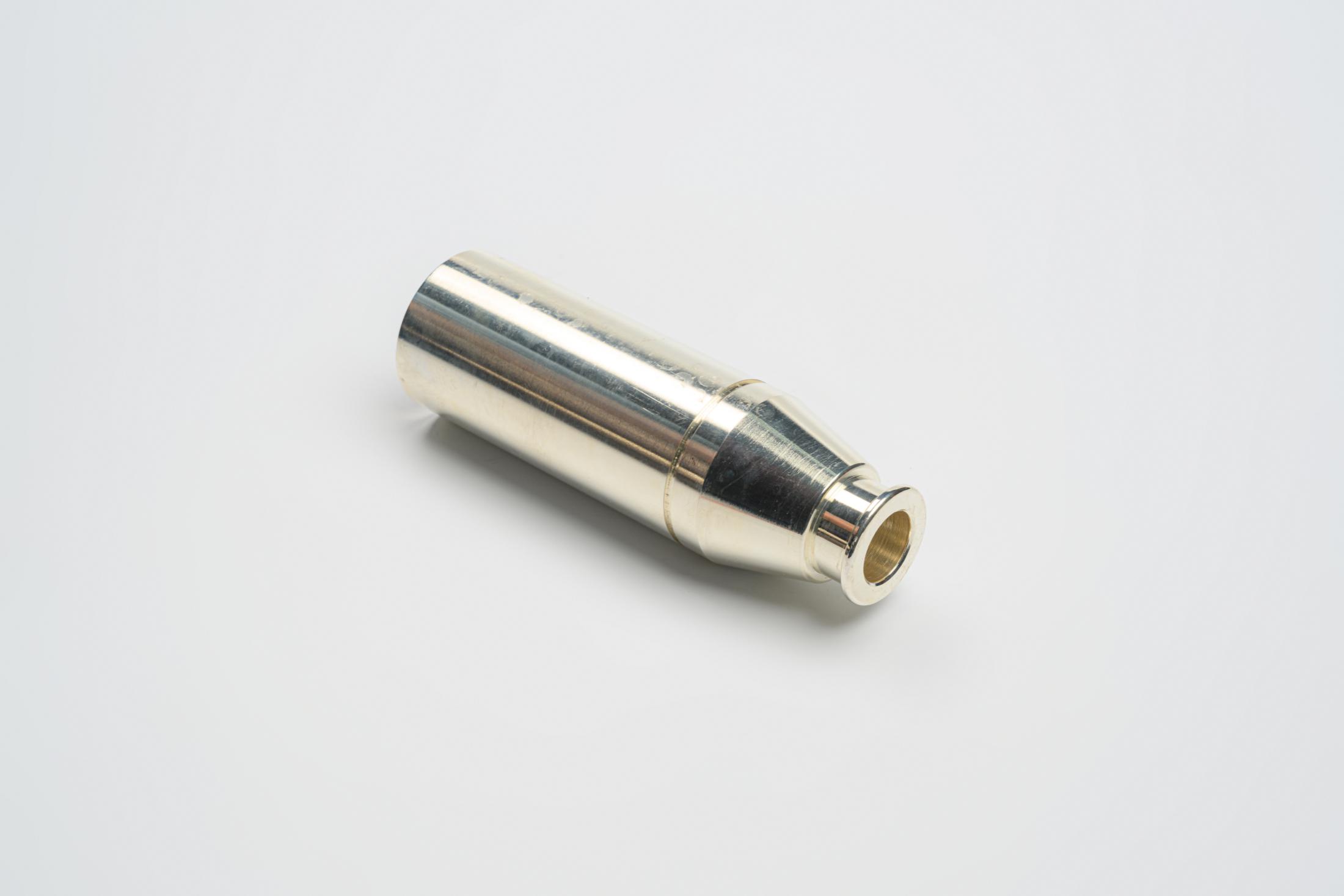
Contact Arm Pair for MV Switchgear
A matched contact arm pair consists of two arms produced as a coordinated unit, same lot, same dimensions, geometrically aligned for the breaker mechanism t...
Contact arms are the structural conductor components that connect the operating mechanism in an MV switchgear assembly to the contact face. They carry full breaker current, support the mechanical motion of opening and closing, and in many designs serve as the visible movement element when the breaker actuates. Material choice ranges from pure copper for the highest conductivity, through aluminum for cost-sensitive builds, to copper-aluminum bimetal where weight and current both matter. We supply contact arms in single-piece configurations (one arm per assembly) and matched pairs (two arms working as a coordinated unit in the breaker mechanism). Custom geometries from drawing are routine.
A matched contact arm pair consists of two arms produced as a coordinated unit, same lot, same dimensions, geometrically aligned for the breaker mechanism t...
Single contact arm, individual arm sold one at a time, for MV breaker mechanisms that use one arm per phase or for replacement orders where only one side ne...
Enquiries mix these up often enough to be worth separating, because they are quoted by different routes.
The contact arm is the structural conductor that links the operating mechanism to the contact face. It carries full breaker current and takes the mechanical load of opening and closing. It is a machined conductor, and its problems are current density, stiffness, and fatigue.
The contact finger is a spring-loaded element that maintains contact force in a plug-in or sliding joint. Its problems are spring rate and force retention — see bronze contact fingers and CuW contact fingers.
The contact itself is the mating face where current transfers, covered under contacts and contact assemblies.
| Material | Trade-off |
|---|---|
| Pure copper | Highest conductivity, heaviest, softest. The default where current dominates |
| Aluminum | Lighter and cheaper, lower conductivity, needs a larger section for the same current |
| Copper-aluminum bimetal | Copper where the joint and contact surfaces are, aluminum through the span. Used where weight and current both matter |
Two supply configurations:
Order the pair when the mechanism relies on the two arms tracking each other. Mixing a new arm with an aged one puts the contact timing out, and on a breaker that shows up as uneven contact wear rather than as an obvious fault. The contact arm selection guide covers the sizing route.
Pair if the two arms work as a coordinated unit in the mechanism, or if the existing pair has seen equal service. Single for one-per-phase designs and for a genuine one-off replacement.
Yes. Send the sample and state the alloy if it is known. Mark the mounting interface and the contact face — those are the two surfaces where the tolerance actually matters, and a general tolerance note over the whole part costs money without buying anything.
A drawing or sample, the material, continuous current rating, and quantity. If the arm is plated, state the plating and the masked areas.
